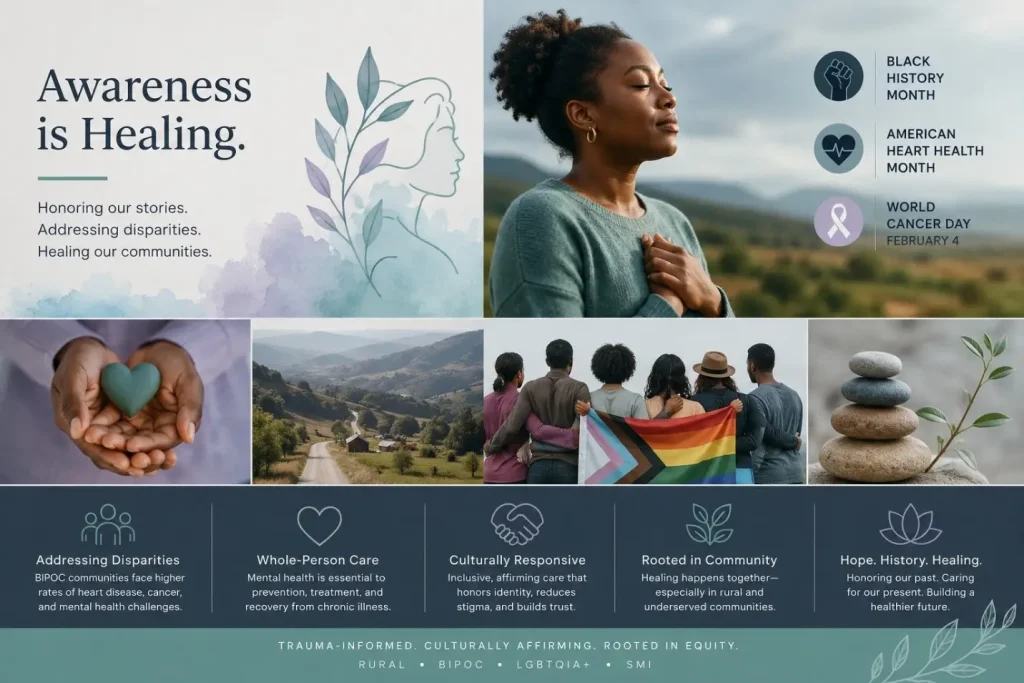
February is a uniquely powerful month in public health awareness, encompassing Black History Month, American Heart Health Month, and World Cancer Day. Together, these observances highlight the urgent need to address health disparities affecting Black, Indigenous, and People of Color (BIPOC) communities particularly in relation to cardiovascular disease, cancer outcomes, and the overlooked role of mental health in chronic illness recovery.
At Mapping Resilience Therapy Center, therapist Krishana Overstreet, LCSW, integrates trauma-informed and culturally responsive mental health care with a deep commitment to addressing the whole person mind, body, identity, and environment. This commitment is also deeply personal. Krishana lost her “heart” (her spouse) to Myxoid liposarcoma, a rare soft tissue cancer. This lived experience underscores her clinical belief that recovery and treatment for chronic illnesses such as cancer and heart disease must always include mental health care and emotional support, not just medical intervention.
Health Disparities in Heart Disease and Cancer
Cardiovascular disease remains the leading cause of death in the United States, and Black adults experience significantly higher mortality rates compared to White adults (Carnethon et al., 2017). Structural inequities such as limited access to preventive care, chronic stress exposure, and healthcare bias contribute to these disparities. Similarly, cancer outcomes vary dramatically by race. Black individuals are more likely to be diagnosed at later stages and experience higher mortality rates for several cancers, including breast, prostate, and colorectal cancers (DeSantis et al., 2019).
World Cancer Day emphasizes that these disparities are not only biological they are deeply social and systemic. Stress, access to care, environmental exposures, and healthcare mistrust all contribute to worse outcomes in marginalized populations.
The Mind-Body Connection in Chronic Illness
Research in psychoneuroimmunology demonstrates that chronic stress significantly impacts immune function, inflammation levels, and disease progression (Slavich & Irwin, 2014). For individuals living with cancer or heart disease, untreated anxiety, depression, and trauma can worsen physical symptoms and reduce quality of life.
For example, a Black middle-aged man recovering from a heart attack may experience ongoing anxiety about recurrence while simultaneously navigating racial bias in healthcare settings. Without integrated mental health care, his emotional distress may go unaddressed, increasing the risk of secondary cardiac events.
Similarly, a Black woman undergoing cancer treatment may experience depression, body image distress, and financial toxicity while managing chemotherapy side effects. Without trauma-informed support, these emotional burdens can compound physical suffering and delay recovery.
Case Examples: Why Integrated Care Matters
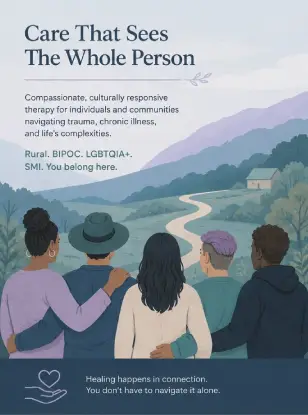
A rural Black caregiver supporting a spouse with cancer may experience chronic burnout, grief, and isolation due to lack of local mental health services. A neurodivergent cancer survivor may struggle with sensory sensitivity during treatment, yet have no access to providers who understand both autism and oncology-related trauma. An LGBTQI+ Black elder managing heart disease may avoid medical care due to past discrimination in healthcare systems.
These lived experiences demonstrate that physical illness cannot be separated from emotional and psychological health.
The Role of Trauma Informed Mental Health Care
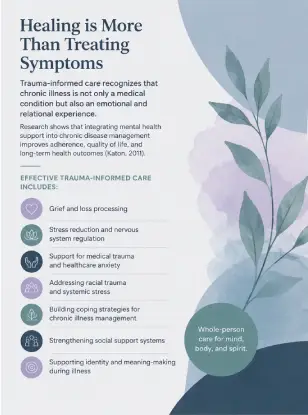
Trauma-informed care recognizes that chronic illness is not only a medical condition but also an emotional and relational experience. Research shows that integrating mental health support into chronic disease management improves adherence, quality of life, and long-term health outcomes (Katon, 2011).
Effective trauma-informed care includes:
- Grief and loss processing
- Stress reduction and nervous system regulation
- Support for medical trauma and healthcare anxiety
- Addressing racial trauma and systemic stress
- Building coping strategies for chronic illness management
- Strengthening social support systems
- Supporting identity and meaning-making during illness
Honoring Black History Through Health Equity
Black History Month reminds us that health equity is inseparable from racial justice. Addressing disparities in heart disease and cancer outcomes requires not only medical treatment but also culturally responsive mental health care that acknowledges systemic oppression and lived experience.
At Mapping Resilience Therapy Center, Krishana Overstreet provides trauma-informed, culturally responsive therapy that honors the full humanity of individuals navigating chronic illness, grief, identity, and systemic inequities.
To begin compassionate, integrated mental health care that supports both emotional and physical healing, schedule an appointment with therapist Krishana Overstreet at Mapping Resilience Therapy Center.
Honoring Black History Through Health Equity
Black History Month reminds us that health equity is inseparable from racial justice. Addressing disparities in heart disease and cancer outcomes requires not only medical treatment but also culturally responsive mental health care that acknowledges systemic oppression and lived experience.
At Mapping Resilience Therapy Center, Krishana Overstreet provides trauma-informed, culturally responsive therapy that honors the full humanity of individuals navigating chronic illness, grief, identity, and systemic inequities.
To begin compassionate, integrated mental health care that supports both emotional and physical healing, schedule an appointment with therapist Krishana Overstreet at Mapping Resilience Therapy Center.