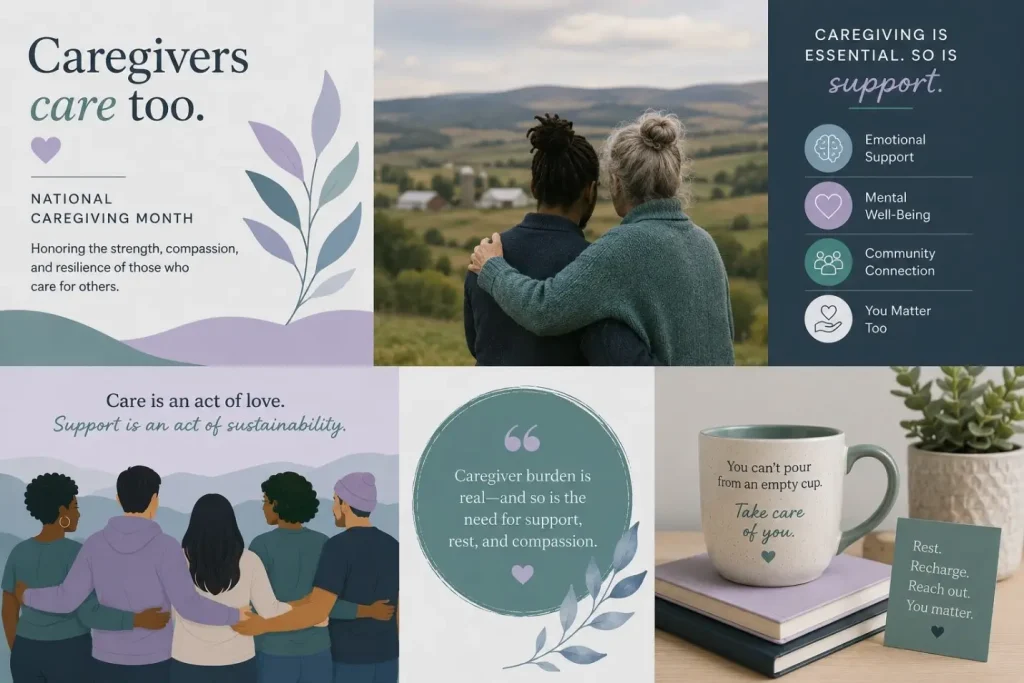
National Caregiving Month recognizes the millions of unpaid and professional caregivers who provide essential physical, emotional, and psychological support to individuals with chronic illness, disability, aging-related needs, severe mental illness (SMI), and developmental or neurodivergent conditions. While caregiving is often framed as an act of love and duty, research consistently shows that caregivers especially those from BIPOC, LGBTQI+, neurodivergent, and rural communities face significantly elevated risks of burnout, depression, anxiety, and trauma-related stress (Schulz & Sherwood, 2008).
At Mapping Resilience Therapy Center, therapist Krishana Overstreet emphasizes that caregiver mental health is not separate from caregiving responsibilities it is a critical component of sustainable, ethical, and trauma-informed care. Krishana founded her practice with a commitment to improving access to culturally responsive mental health services for marginalized communities, recognizing that caregiving burdens are often intensified by systemic inequities, limited healthcare access, and identity-based stress.
Caregivers frequently experience what researchers call “caregiver burden,” a multidimensional stress response that includes emotional exhaustion, physical fatigue, financial strain, and social isolation. According to Adelman et al. (2014), caregivers of individuals with chronic illness or cognitive impairment are at increased risk for depression and anxiety compared to non-caregivers, particularly when support systems are limited or culturally mismatched.
For example, a Black mother caring for an autistic child in a rural community may experience chronic stress due to limited access to neurodivergent-affirming providers, compounded by racial disparities in healthcare and geographic isolation. A queer adult caring for a partner with severe mental illness may experience emotional burnout while navigating stigma from both family systems and medical institutions. A neurodivergent caregiver supporting an aging parent may struggle with sensory overload, executive functioning demands, and emotional regulation challenges, all while prioritizing the needs of others.
These examples illustrate a key clinical truth: caregiving stress does not exist in isolation. It is deeply shaped by systemic oppression, access to resources, and identity-based experiences. Research shows that caregivers from marginalized communities often underutilize mental health services due to stigma, lack of culturally responsive providers, and mistrust of healthcare systems (Pinquart & Sörensen, 2011).
Trauma-informed caregiving care emphasizes that caregivers must be supported as whole individuals—not just as extensions of those they care for. When caregivers neglect their own mental health, the risk of burnout increases significantly, often leading to emotional withdrawal, resentment, compassion fatigue, and decreased quality of care.

Protective strategies for caregiver mental health include:
- Establishing consistent emotional and physical boundaries
- Accessing culturally responsive therapy and peer support groups
- Scheduling intentional rest and recovery time
- Practicing self-regulation techniques (grounding, mindfulness, sensory breaks)
- Seeking respite care or shared caregiving responsibilities
- Addressing grief, guilt, and identity conflict in therapy
- Rebuilding identity outside of caregiving roles
Importantly, caregiver self-care is not indulgent it is clinically essential. Studies show that caregiver well-being directly impacts the physical and emotional health outcomes of care recipients (Schulz & Sherwood, 2008). In other words, supporting caregivers improves entire systems of care.
At Mapping Resilience Therapy Center, caregiver support is rooted in culturally responsive and trauma-informed frameworks that honor intersectional identity. Caregivers are not expected to separate their identities from their roles; instead, therapy explores how race, disability, neurodivergence, sexuality, geography, and cultural expectations shape caregiving experiences.
Caregiving Month is an opportunity to reframe caregiving from self-sacrifice to sustainable care. Supporting caregivers means recognizing their humanity, emotional needs, and right to receive care in return. To begin therapy focused on caregiver burnout, trauma-informed support, and culturally responsive mental health care, schedule an appointment with therapist Krishana Overstreet at Mapping Resilience Therapy Center.