Social media has transformed the way people learn about mental health, trauma, relationships, and emotional wellbeing. Platforms such as TikTok, Instagram, YouTube, and podcasts have increased access to conversations surrounding anxiety, depression, ADHD, autism, trauma, and self-care. For many individuals within BIPOC, neurodivergent, LGBTQI+, serious mental illness (SMI), and rural communities, social media may provide validation, representation, and language for experiences that were previously ignored or stigmatized. However, the growing overlap between licensed mental health care, life coaching, and online social commentary has also created significant confusion and potential harm.
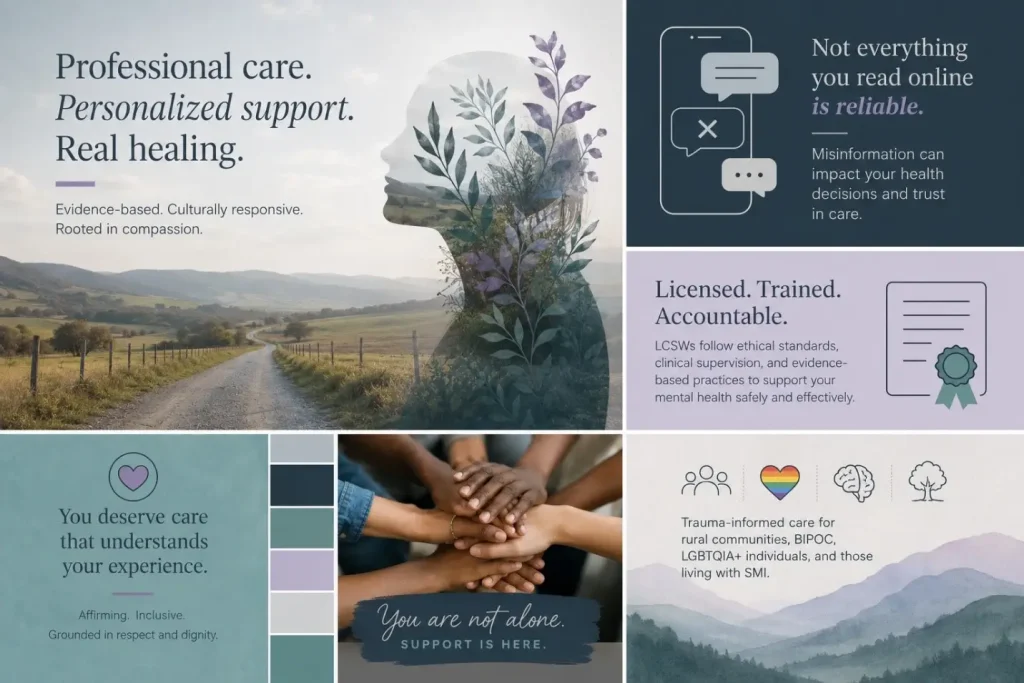
Many individuals struggle to distinguish between evidence-based mental health treatment provided by licensed clinicians and generalized advice from influencers, coaches, or content creators with no formal clinical training. While some online creators offer supportive and educational content, others present oversimplified, inaccurate, or harmful information that may negatively influence mental health decision-making (Naslund et al., 2020). Trauma informed therapy recognizes that vulnerable individuals often seek answers online when access to quality mental health care feels limited, expensive, stigmatized, or inaccessible.
One growing concern is the rise of “therapy language” being used outside of clinical contexts without appropriate nuance or ethical responsibility. Terms such as “gaslighting,” “narcissist,” “toxic,” “trauma bond,” or “boundaries” are frequently used in social media discussions, sometimes inaccurately. Although increased awareness of mental health terminology can be empowering, misuse of these concepts may contribute to relational conflict, self-diagnosis, stigma, or avoidance of appropriate treatment.
For example, a young autistic adult consuming social media content about “cutting off toxic people” may begin distancing themselves from all interpersonal conflict without understanding the difference between healthy disagreement and emotional abuse. Another example may involve a Black woman experiencing symptoms of bipolar disorder who follows motivational life coaches promoting “mindset shifts” as substitutes for psychiatric treatment. Without proper clinical support, symptoms may worsen due to delayed intervention or shame surrounding medication and evidence-based care.
Research shows that misinformation online can significantly impact healthcare behaviors and trust in professional treatment systems (Swire-Thompson & Lazer, 2020). This concern becomes particularly important for marginalized communities already navigating systemic healthcare inequities, discrimination, or historical mistrust of institutions. Individuals in rural communities may rely heavily on social media for mental health information due to provider shortages and lack of specialized care. Similarly, LGBTQI+ individuals may seek online validation when affirming therapy resources are limited in their geographic area.
Unlike licensed mental health professionals, life coaches and influencers are not universally regulated by ethical boards, licensure laws, clinical supervision requirements, confidentiality standards, or evidence-based treatment guidelines. Licensed clinicians, including Licensed Clinical Social Workers (LCSWs), are trained to assess risk, diagnose mental health conditions, recognize suicidality, address trauma safely, and understand the complexity of human behavior within sociocultural contexts. Social media commentary alone cannot replace individualized mental health treatment (Ventola, 2014).
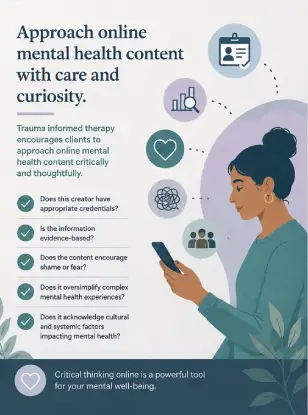
Trauma informed therapy encourages clients to approach online mental health content critically and thoughtfully. Helpful questions may include: Does this creator have appropriate credentials? Is the information evidence-based? Does the content encourage shame or fear? Does it oversimplify complex mental health experiences? Does it acknowledge cultural and systemic factors impacting mental health?
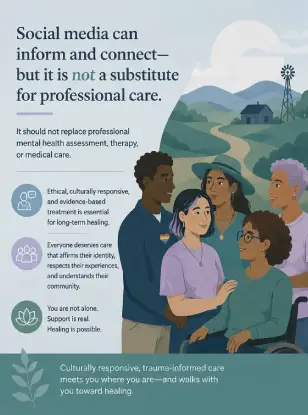
Social media can be a valuable tool for awareness and community connection, but it should not replace professional mental health assessment, therapy, or medical care. Ethical, culturally responsive, and evidence-based treatment remains essential for long-term healing, especially for individuals navigating trauma, neurodivergence, identity stress, or serious mental health concerns.
If you are feeling overwhelmed by mental health information online or are seeking evidence-based, trauma-informed support, consider scheduling an appointment with therapist Krishana Overstreet at Mapping Resilience Therapy Center to receive culturally responsive care tailored to your lived experiences.