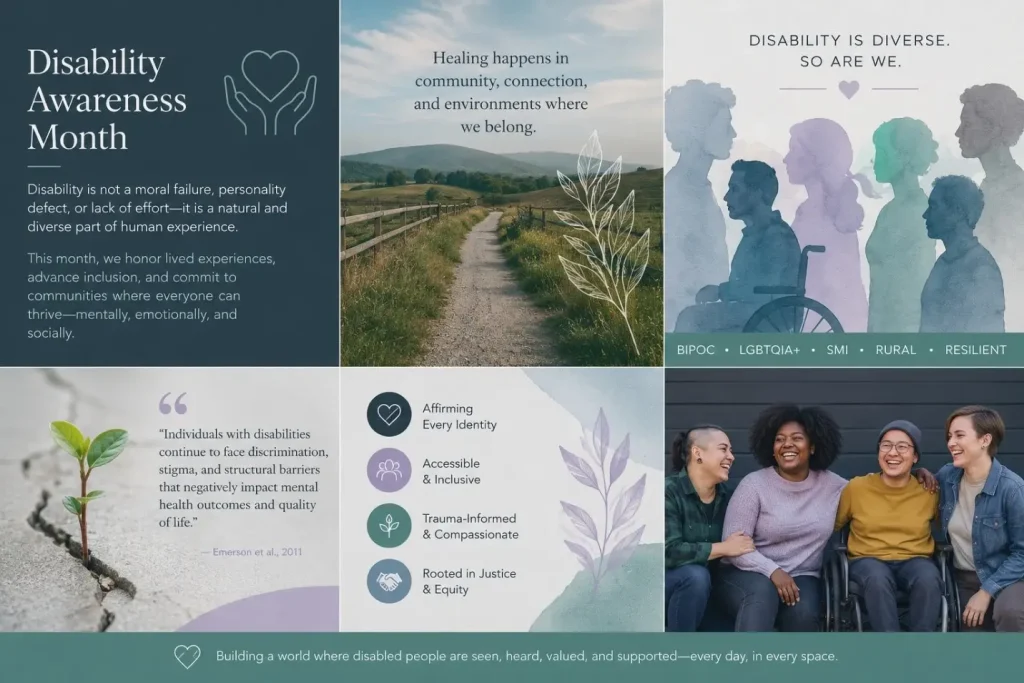
December is recognized as Disability Awareness Month, a time to highlight the lived experiences, rights, and resilience of disabled individuals while also addressing the ongoing impact of ableism in healthcare, education, employment, and everyday social systems. Disability is not a moral failure, personality defect, or lack of effort it is a natural and diverse part of human experience. Yet research consistently shows that individuals with disabilities continue to face discrimination, stigma, and structural barriers that negatively impact mental health outcomes and quality of life (Emerson et al., 2011).
At Mapping Resilience Therapy Center, therapist Krishana Overstreet provides trauma-informed, culturally responsive care for BIPOC, LGBTQI+, neurodivergent, severely mentally ill (SMI), rural, and disabled communities. Krishana’s clinical work is grounded in the belief that disability justice and mental health equity are inseparable. Her practice was intentionally created to reduce barriers to affirming care and support individuals who are often misunderstood or excluded from traditional systems of mental health treatment.
Ableism is defined as discrimination or social prejudice against people with disabilities. Like all “isms”, it can be both overt and covert. It may appear in healthcare settings through diagnostic overshadowing (where symptoms are attributed solely to disability rather than treating co-occurring conditions), dismissive communication, lack of accessibility accommodations, or assumptions that disabled individuals are less capable or less autonomous. Research indicates that ableism contributes significantly to poorer mental health outcomes, increased stress, and reduced access to adequate care (Bogart & Dunn, 2019).
For example, a neurodivergent Black autistic adult seeking therapy for trauma may encounter clinicians who minimize sensory distress or fail to recognize how racism and ableism intersect in their lived experience. A Deaf LGBTQ+ client may struggle to find affirming providers with accessible communication methods. A rural individual with chronic illness may face compounded barriers due to geographic isolation, limited transportation, and a lack of disability informed clinicians. These examples highlight how disability justice must also consider race, sexuality, gender identity, geography, and socioeconomic status.
A disability affirming world benefits everyone not only disabled individuals. Universal Design principles demonstrate that accessibility improvements such as captioning, ramps, sensory friendly environments, flexible communication methods, and telehealth services enhance usability for all people, including caregivers, aging populations, parents, and individuals with temporary injuries (Story et al., 1998). In other words, accessibility is not special accommodation it is good design.
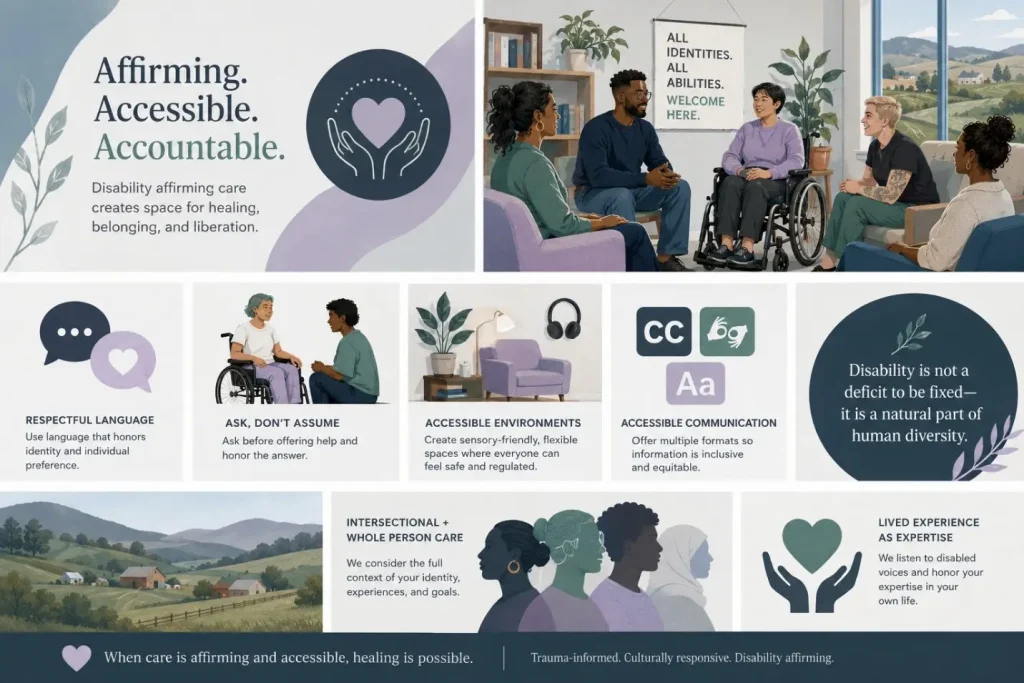
Reducing ableism requires intentional action in both personal and professional spaces. Evidence-based strategies include:
- Using identity-first or person-first language based on individual preference
- Avoiding assumptions about capability, intelligence, or independence
- Asking before offering help rather than assuming incapacity
- Incorporating sensory-friendly and flexible environments in clinical settings
- Ensuring accessible communication formats (text, captions, ASL interpretation when possible)
- Recognizing disability as identity rather than deficit
- Addressing intersectionality in treatment planning (race, gender, sexuality, neurodivergence)
- Listening to disabled voices and lived experience as expertise
In clinical practice, disability affirming care aligns closely with trauma informed care. Many disabled individuals experience “secondary trauma” from repeated invalidation, medical neglect, institutional barriers, or coercive treatment experiences. Studies show that when providers adopt affirming, collaborative, and accessible approaches, clients report higher satisfaction, improved engagement, and better mental health outcomes (Bogart & Dunn, 2019).
Case Example #1
A rural disabled veteran receiving telehealth therapy with sensory accommodations reports reduced anxiety and improved trust in healthcare.
Case Example #2
A neurodivergent teen in an affirming therapeutic environment learns emotional regulation strategies without being pathologized.
Case Example #3
A wheelchair user in culturally responsive therapy feels empowered to advocate for workplace accessibility without shame.
Ultimately, disability awareness is not about awareness alone it is about action, equity, and systemic change. A disability affirming world is not only more just; it is more functional, humane, and supportive for all people. To begin trauma informed, disability affirming, and culturally responsive mental health care, schedule an appointment with therapist Krishana Overstreet at Mapping Resilience Therapy Center.