Family estrangement can be one of the most painful and emotionally complex experiences a person faces, especially for individuals from marginalized communities. For many BIPOC, LGBTQI+, neurodivergent, severely mentally ill (SMI), and rural individuals, family relationships are often deeply tied to cultural identity, spirituality, survival, and community belonging. When estrangement occurs due to identity rejection, trauma, abuse, religious conflict, stigma, or generational expectations, the grief can feel layered and isolating.
Research shows that LGBTQ+ individuals, particularly those in rural areas and communities of color, experience higher rates of family rejection, identity-based trauma, and social isolation, which can significantly impact mental health outcomes (Wike et al., 2022). Trauma informed therapy recognizes that estrangement is rarely a simple “cut off.” Instead, it often involves navigating chronic grief, guilt, hypervigilance, cultural shame, and pressure from both internal and external systems.
For example, a queer Black adult may experience pressure to maintain family loyalty despite repeated emotional harm due to cultural narratives around collectivism and respectability. Similarly, an autistic adult from a rural religious family may feel forced to mask their identity to maintain family acceptance. In many cases, marginalized individuals are asked to sacrifice authenticity in exchange for conditional belonging.
Studies on queer and transgender communities highlight the importance of “chosen family” systems supportive relationships formed outside biological family structures which often become protective factors for healing and resilience (Levin et al., 2020). Creating affirming support networks can reduce isolation while strengthening identity development and emotional safety.
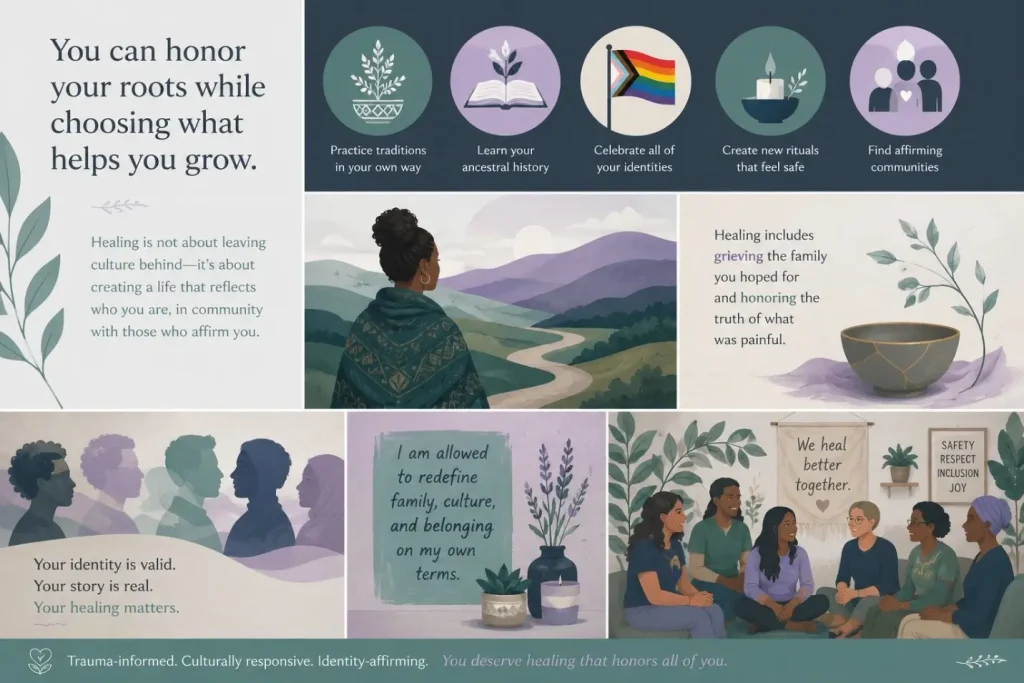
Estrangement does not mean abandoning culture. Healing may involve redefining culture in ways that honor both heritage and individuality. This can include:
- Practicing cultural traditions independently or with supportive community members
- Learning ancestral history outside harmful family dynamics
- Celebrating identity intersections openly and unapologetically
- Creating new rituals that align with personal values and safety
- Engaging with affirming BIPOC, LGBTQI+, neurodivergent, or disability-centered communities
A trauma informed approach also encourages grieving the “idealized family” many hoped for while acknowledging the reality of harmful dynamics. Research involving transgender individuals demonstrates how identity invalidation within families contributes to long-term relational trauma and emotional instability (Stone et al., 2024).
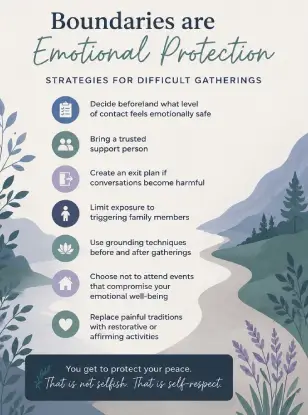
Major holidays, weddings, funerals, and cultural gatherings can intensify emotional distress for estranged individuals. Setting boundaries during these events is not selfish it is a form of emotional protection. Helpful strategies may include:
- Deciding beforehand what level of contact feels emotionally safe
- Bringing a trusted support person
- Creating an exit plan if conversations become harmful
- Limiting exposure to triggering family members
- Using grounding techniques before and after gatherings
- Choosing not to attend events that compromise emotional well-being
- Replacing painful traditions with restorative or affirming activities
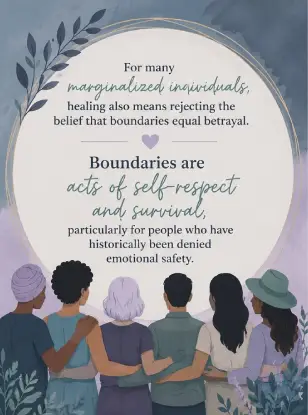
For many marginalized individuals, healing also means rejecting the belief that boundaries equal betrayal. Boundaries are acts of self-respect and survival, particularly for people who have historically been denied emotional safety.
Therapy can provide a supportive space to process estrangement trauma, identity conflict, cultural grief, and complex family systems while helping individuals reclaim authenticity without shame.
To begin healing and navigating family estrangement with culturally responsive, trauma-informed support, schedule an appointment with therapist Krishana Overstreet at Mapping Resilience Therapy Center.