October is recognized as Mental Health Parity Month, a time dedicated to raising awareness about equitable access to mental health care and advocating for equal treatment of mental health conditions within healthcare systems. Mental health parity means that mental health and substance use treatment should be covered and prioritized at the same level as physical health care. While legislation such as the Mental Health Parity and Addiction Equity Act (MHPAEA) has increased protections for consumers, many marginalized individuals continue to experience barriers to receiving quality, affirming, and accessible mental health treatment.
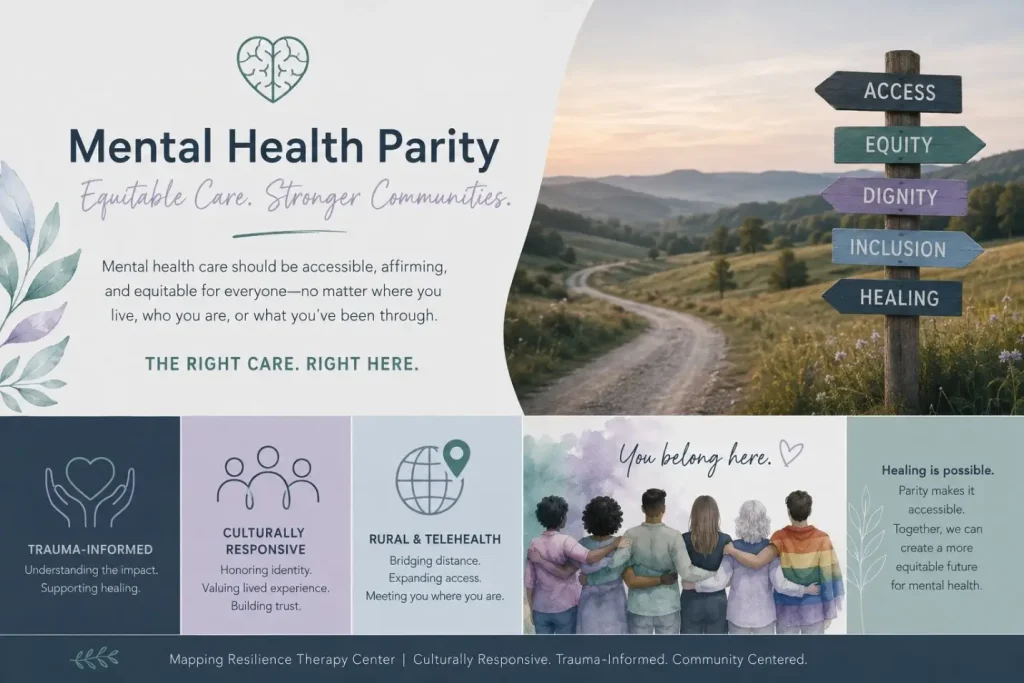
For therapist Krishana Overstreet, founder of Mapping Resilience Therapy Center, mental health parity is more than a policy issue it is the foundation of her professional mission. Krishana began her practice with the specific goal of improving access to culturally responsive, trauma-informed mental health care for underserved populations, including BIPOC, LGBTQI+, neurodivergent, severely mentally ill (SMI), and rural communities. Inspired by a former employer’s phrase, “The right care, right here,” Krishana has dedicated her career to ensuring individuals can access qualified and well-trained clinicians regardless of geographic location, identity, or systemic barriers.
Research consistently demonstrates that marginalized communities experience disparities in mental health treatment access, provider quality, and clinical outcomes. Racial and ethnic minority populations are less likely to receive mental health treatment and more likely to terminate therapy early due to mistrust, stigma, and culturally unresponsive care (McGuire & Miranda, 2008). LGBTQ+ individuals similarly face elevated rates of anxiety, depression, trauma, and suicidal ideation while often struggling to locate affirming providers who understand identity-based stressors and discrimination (Kattari et al., 2020).
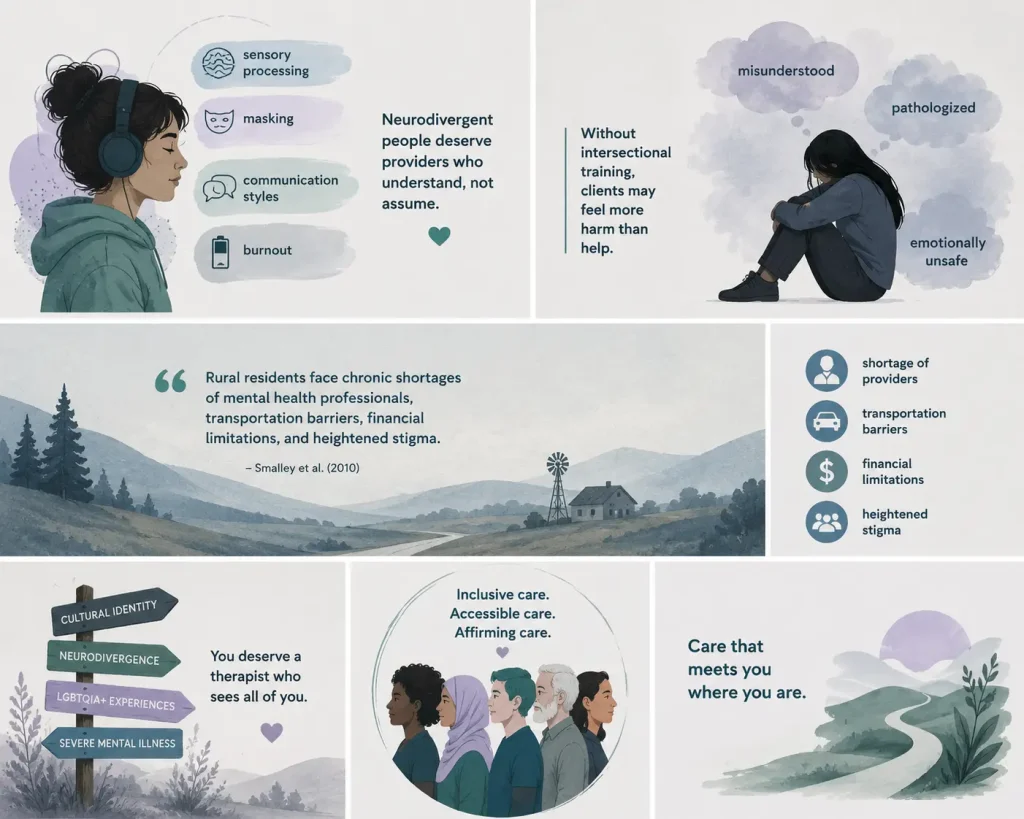
Neurodivergent individuals also face significant barriers to effective treatment. Autistic adults, for example, frequently report negative healthcare experiences due to clinicians lacking knowledge about sensory processing differences, masking, communication styles, and burnout. When mental health providers are not adequately trained in intersectional care, clients may feel misunderstood, pathologized, or emotionally unsafe.
The disparities become even more pronounced in rural communities. According to Smalley et al. (2010), rural residents face chronic shortages of mental health professionals, transportation barriers, financial limitations, and heightened stigma surrounding therapy and psychiatric care. Individuals living in rural communities may travel hours to access specialized care or go without treatment entirely. For marginalized individuals living in these areas, finding a therapist who understands cultural identity, neurodivergence, LGBTQI+ experiences, or severe mental illness can feel nearly impossible.
Consider the experience of a queer Black college student living in a rural community who seeks therapy for anxiety and trauma related to racism and family rejection. Despite having insurance coverage, they may struggle to find a therapist trained in both racial trauma and LGBTQI+ affirming care. Similarly, an autistic adult with PTSD may encounter clinicians who misinterpret sensory overload or shutdowns as noncompliance rather than trauma responses. These experiences highlight that mental health parity is not only about insurance coverage it is about meaningful access to competent, affirming, and trauma-informed treatment.
Culturally responsive therapy recognizes that emotional distress often develops within broader systems of oppression, discrimination, and chronic stress. Research indicates that culturally humble and identity-affirming therapeutic relationships improve engagement, trust, and treatment outcomes among marginalized populations (Hook et al., 2016). Trauma-informed clinicians acknowledge the impact of racism, ableism, homophobia, transphobia, poverty, religious trauma, and systemic inequities while helping clients build resilience and emotional safety.
At Mapping Resilience Therapy Center, the focus is on creating affirming therapeutic spaces where clients do not have to educate their therapist about their lived experiences. This includes providing support for:
- Complex trauma and PTSD
- Neurodivergent burnout and masking
- Racial and identity-based trauma
- LGBTQI+ identity exploration and affirmation
- Severe mental illness and emotional regulation
- Family estrangement and relational trauma
- Rural mental health challenges and isolation
Mental Health Parity Month reminds us that everyone deserves access to “the right care, right here.” True mental health equity means ensuring that quality care is accessible, affirming, trauma-informed, and culturally responsive for all individuals not only those living in urban areas or dominant communities. If you are searching for compassionate, culturally informed therapy that honors your full identity and lived experience, schedule an appointment with therapist Krishana Overstreet at Mapping Resilience Therapy Center.