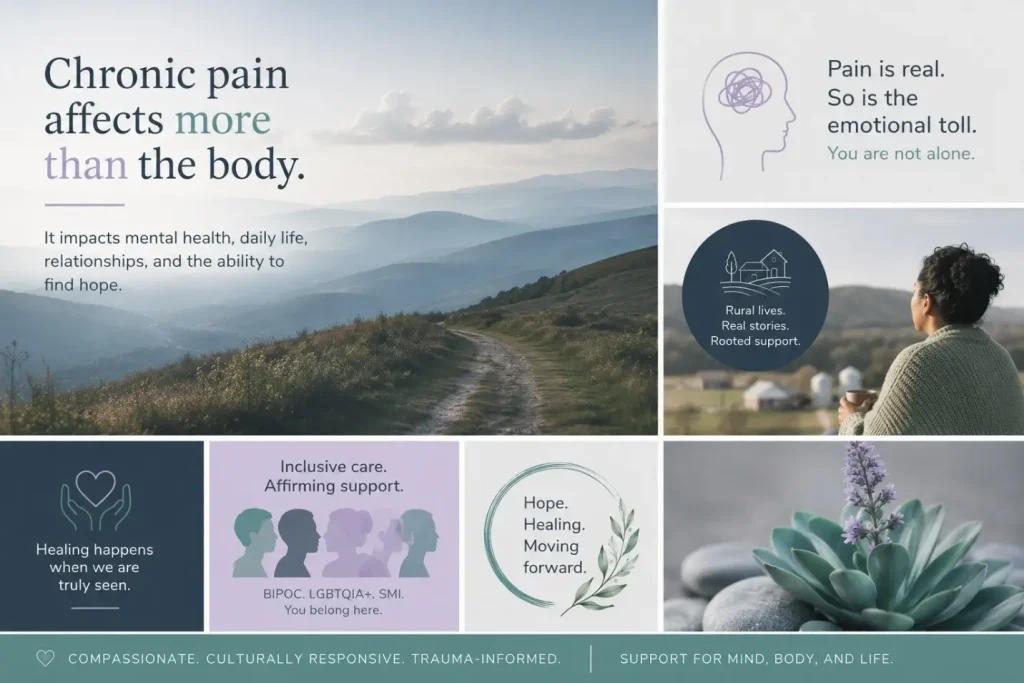
Chronic pain and long-term health conditions can significantly impact an individual’s mental health, emotional well-being, and overall quality of life. Conditions such as fibromyalgia, diabetes, autoimmune disorders, migraines, arthritis, chronic fatigue syndrome, and neurological illnesses often affect more than physical functioning. Persistent pain can contribute to depression, anxiety, trauma responses, social isolation, sleep disturbances, and emotional exhaustion. For BIPOC, neurodivergent, LGBTQI+, serious mental illness (SMI), and rural communities, the emotional burden of chronic illness may be intensified by healthcare disparities, discrimination, stigma, and reduced access to culturally responsive care.
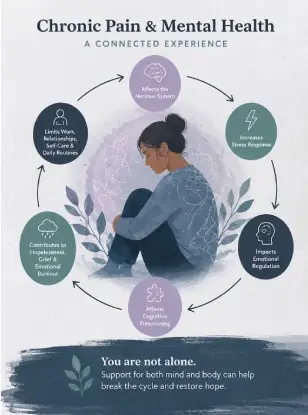
Research consistently demonstrates a strong relationship between chronic pain and mental health disorders. According to Bair et al. (2003), individuals living with chronic pain are significantly more likely to experience depression and anxiety, with each condition often worsening the other. Chronic pain affects the nervous system, stress response, emotional regulation, and cognitive functioning, making it difficult for individuals to engage fully in work, relationships, self-care, and daily routines. Over time, repeated medical stress, uncertainty, and functional limitations can create feelings of hopelessness, grief, and emotional burnout.
For marginalized populations, these experiences may be compounded by systemic barriers within healthcare systems. BIPOC individuals often report disparities in pain assessment and treatment, including undertreatment of pain and dismissal of symptoms. LGBTQI+ individuals may avoid medical care due to prior experiences of discrimination or identity invalidation. Neurodivergent individuals may struggle with sensory processing issues, communication differences, or difficulties navigating healthcare systems. Rural communities frequently face limited access to pain specialists, transportation challenges, and shortages of integrated behavioral healthcare services.
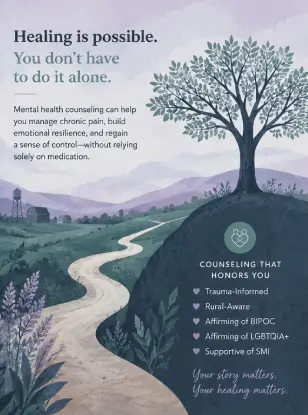
Mental health counseling can play an essential role in helping individuals manage chronic pain and improve emotional resilience without relying solely on medication. Trauma-informed therapy recognizes that chronic pain is both a physical and emotional experience. Research supports the effectiveness of psychological interventions such as Cognitive Behavioral Therapy (CBT), mindfulness-based stress reduction, Acceptance and Commitment Therapy (ACT), and somatic approaches in reducing pain-related distress and improving daily functioning (Ehde et al., 2014).
For example, CBT can help individuals identify negative thought patterns related to pain, such as catastrophizing or hopelessness, and replace them with healthier coping strategies. Mindfulness practices may assist clients in calming the nervous system, improving emotional regulation, and reducing stress-related pain flare-ups. Somatic and body-based interventions can help clients reconnect safely with their bodies after experiences of trauma, chronic illness, or medical invalidation. Counseling may also provide space for grief processing, identity adjustment, boundary-setting, and developing self-compassion.
Studies examining integrated pain management approaches demonstrate promising outcomes. A meta-analysis by Veehof et al. (2016) found that acceptance and mindfulness-based interventions significantly improved psychological flexibility, emotional functioning, and quality of life among individuals with chronic pain conditions. Similarly, interdisciplinary treatment models that combine behavioral health, medical care, and social support have shown improved outcomes for individuals living with persistent pain and chronic illness.
Non-medication pain management strategies supported through therapy may include stress reduction techniques, grounding exercises, pacing activities to prevent burnout, improving sleep hygiene, relaxation training, movement-based coping strategies, and strengthening social support systems. Counseling can also help individuals advocate for themselves within healthcare settings and address the emotional effects of chronic illness stigma or invalidation. Healing from chronic pain requires a whole person approach that addresses emotional health alongside physical symptoms. Individuals deserve compassionate, culturally responsive care that validates both their pain and their resilience while supporting sustainable coping strategies beyond medication alone.