Artificial intelligence (AI) is rapidly transforming healthcare, including the mental health field. AI-powered chatbots, virtual therapy apps, and automated emotional support platforms are increasingly marketed as convenient mental health tools. While these technologies may offer temporary support, reminders, psychoeducation, or coping suggestions, mental health experts and AI industry leaders consistently warn that artificial intelligence should never replace trained and licensed mental health professionals. For individuals navigating trauma, serious mental illness (SMI), identity-based stress, or systemic oppression, relying solely on AI for emotional care may create significant risks, especially for BIPOC, neurodivergent, LGBTQI+, and rural communities already facing disparities in healthcare access.
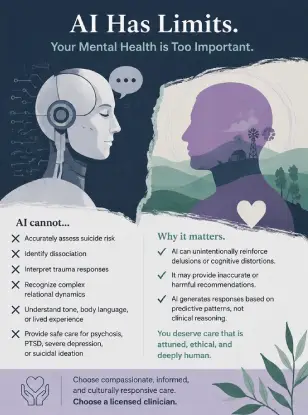
Research indicates that AI lacks the human empathy, cultural responsiveness, ethical judgment, and clinical intuition necessary for safe therapeutic care. Unlike licensed clinicians, AI systems cannot accurately assess suicide risk, identify dissociation, interpret trauma responses, or recognize complex relational dynamics. Mental health treatment requires attunement to tone, body language, lived experience, and contextual factors that machines cannot fully understand (Luxton, 2014). Trauma informed therapy depends on trust, emotional safety, and relational healing, all of which emerge through authentic human connection rather than algorithmic interaction.
Several case studies and public incidents have raised concerns regarding the misuse of AI as a substitute for therapy. In 2023, reports emerged of individuals experiencing worsening emotional distress after interacting with AI chatbots that provided misleading or harmful responses related to mental health crises. Mental health researchers have warned that AI systems can unintentionally reinforce delusions, validate cognitive distortions, or provide inaccurate recommendations because these systems generate responses based on predictive language patterns rather than clinical reasoning (Miner et al., 2020). This can be especially dangerous for individuals living with psychosis, severe depression, PTSD, or suicidal ideation.
Even leaders within the AI industry acknowledge these limitations. Executives and developers connected to major artificial intelligence platforms have repeatedly stated that AI tools are not replacements for licensed therapists, psychiatrists, or crisis professionals. Companies developing conversational AI often include disclaimers advising users to seek qualified mental health care during emotional crises or when experiencing persistent symptoms. These warnings reflect growing ethical concerns about overreliance on technology for psychological support.
For marginalized populations, the dangers may be amplified. BIPOC and LGBTQI+ individuals frequently navigate racism, discrimination, religious trauma, and identity-based stressors that require culturally informed therapeutic interventions. Neurodivergent individuals may need nuanced support related to sensory regulation, masking, executive functioning, or communication styles that AI cannot appropriately tailor to lived experiences. Rural communities also face unique challenges involving isolation, healthcare shortages, and stigma, making access to authentic human support even more essential.
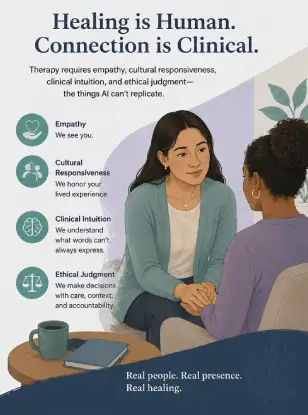
Peer-reviewed research further emphasizes that therapeutic alliance the trusting relationship between therapist and client is one of the strongest predictors of successful treatment outcomes (Flückiger et al., 2018). AI cannot replicate the emotional reciprocity, accountability, or relational repair that occur within psychotherapy. While digital tools may complement treatment through symptom tracking or psychoeducation, they should function only as supplemental supports under the guidance of qualified clinicians.
Mental health healing requires compassion, ethical responsibility, clinical expertise, and human connection. Artificial intelligence may provide convenience, but it cannot replace trauma-informed therapy delivered by trained professionals who understand the complexity of human suffering, resilience, culture, and identity. Individuals deserve mental health care grounded in safety, dignity, cultural humility, and evidence-based practice rather than dependence on automated systems.