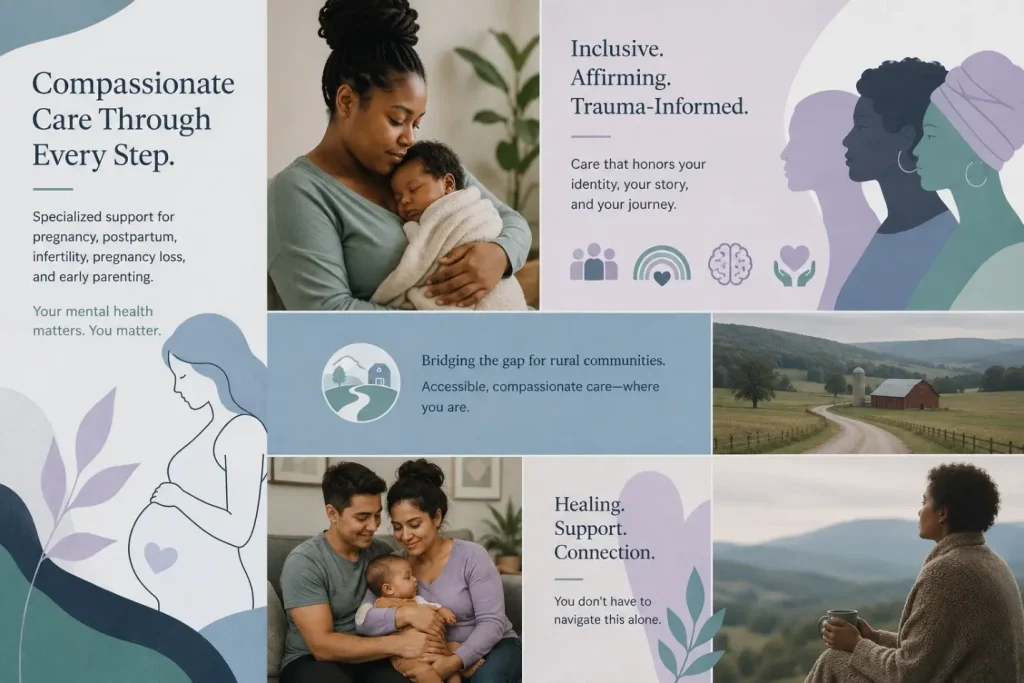
Maternity mental health and perinatal mental health care are essential components of healthcare for individuals experiencing pregnancy, postpartum adjustment, infertility, pregnancy loss, and early parenting transitions. These periods represent some of the most psychologically and physiologically vulnerable times in a person’s life, particularly for individuals from BIPOC, LGBTQI+, neurodivergent, severely mentally ill (SMI), and rural communities who often face additional systemic barriers to care.
At Mapping Resilience Therapy Center, therapist Krishana Overstreet, LCSW, provides trauma informed, culturally responsive mental health care. While perinatal mental health is not a clinical specialty offered within her practice, she strongly advocates for early identification, appropriate referral, and access to highly trained perinatal clinicians. Ensuring clients receive care from specialists in maternity mental health is a core part of her ethical and clinical commitment because the right care, from the right provider, matters.
Understanding Perinatal Mental Health
Perinatal mental health includes emotional and psychological conditions that occur during pregnancy and up to one year postpartum. These conditions include perinatal depression, anxiety, obsessive-compulsive symptoms, birth trauma, and postpartum psychosis. Research indicates that approximately 1 in 7 birthing individuals experience postpartum depression, though rates are higher among marginalized populations due to compounded stress and reduced access to care (Gavin et al., 2005).
Untreated perinatal mental health conditions can significantly impact both caregiver and infant outcomes, including bonding difficulties, impaired functioning, and increased risk of long-term mood disorders.
Health Disparities in Perinatal Mental Health
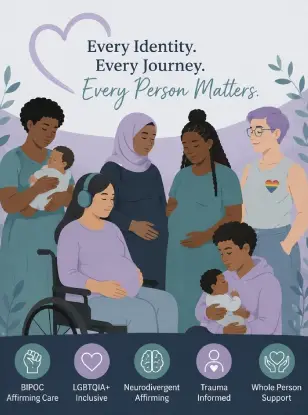
BIPOC individuals experience significantly higher rates of maternal morbidity and mortality, as well as lower access to mental health screening and treatment during pregnancy and postpartum periods (Howell, 2018). Black birthing individuals, in particular, face structural racism within healthcare systems that contributes to elevated stress and poorer outcomes even when controlling for income and education.
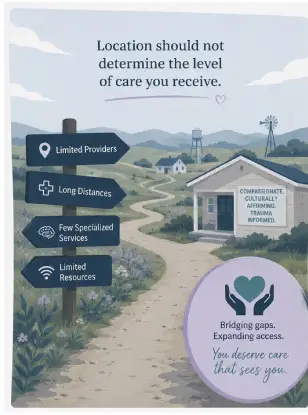
LGBTQI+ individuals may face discrimination in fertility care, pregnancy experiences, and postpartum support systems. Neurodivergent individuals may experience sensory overload, communication barriers, and lack of provider understanding during prenatal care. Rural individuals often encounter limited access to specialized perinatal mental health providers and psychiatric services.
Case Examples: Why Specialized Perinatal Care Matters
A Black first-time mother experiencing postpartum depression may hesitate to disclose symptoms due to fear of being judged or labeled as “noncompliant” within healthcare systems. Without culturally responsive screening, her symptoms may go untreated.
A neurodivergent autistic parent may struggle with postpartum sensory overwhelm and disrupted routines, yet find providers unfamiliar with autism misinterpret these experiences as anxiety alone rather than neurodevelopmental needs.
A rural LGBTQ+ couple pursuing fertility treatment may encounter providers who lack affirming language and inclusive practices, increasing emotional distress during an already vulnerable time.
These examples highlight why specialized perinatal mental health care is critical and why referral to trained clinicians is a necessary part of ethical practice.
Trauma Informed Considerations in Perinatal Care
Research shows that perinatal mental health outcomes improve when care is trauma-informed, culturally responsive, and integrated with obstetric services (Byatt et al., 2013). Trauma histories, birth trauma, systemic stress, and identity-based discrimination all influence perinatal mental health experiences.
Effective perinatal mental health care includes:
- Routine mental health screening during pregnancy and postpartum
- Trauma-informed psychotherapy for birth-related trauma
- Psychiatric support when needed
- Culturally responsive and identity-affirming care
- Integration of family and support systems when appropriate
- Coordination with OB/GYN, midwives, and pediatric providers
Clinical Ethics and Referrals
Because perinatal mental health is a highly specialized field, Krishana Overstreet prioritizes timely referral to clinicians with advanced training in maternity mental health, reproductive psychiatry, and perinatal trauma care.
Referral is not a limitation—it is a clinical strength—
Or, as Krishana puts it with a bit of humor: “I love supporting you, but I love even more making sure you’re with the clinician who actually trained specifically for this, not just someone who once read a blog post in 2012 or attended a one-time seminar 6 months ago.”
Ensuring access to competent, specialized care is one of the most important aspects of ethical, trauma informed practice.
One of the clinicians that I have had the pleasure to review from afar is 3RoadsTherapy Group practice that specializes in motherhood and mental health. They are also starting a group June 6th for $15 for support and guidance by a specialized clinician. It is a steal and don’t miss it.
Reach out to admin@3Roadstherapy.com or visit their website https://www.3roadstherapy.com
Mother Mental Health is Whole Body Health
Perinatal mental health is not just about surviving pregnancy or postpartum it is about supporting emotional safety, identity, and long-term wellness for both caregiver and child. When care is specialized, culturally responsive, and trauma-informed, outcomes improve for entire families.
For trauma-informed, culturally responsive mental health support outside of perinatal specialty care, schedule an appointment with therapist Krishana Overstreet at Mapping Resilience Therapy Center.