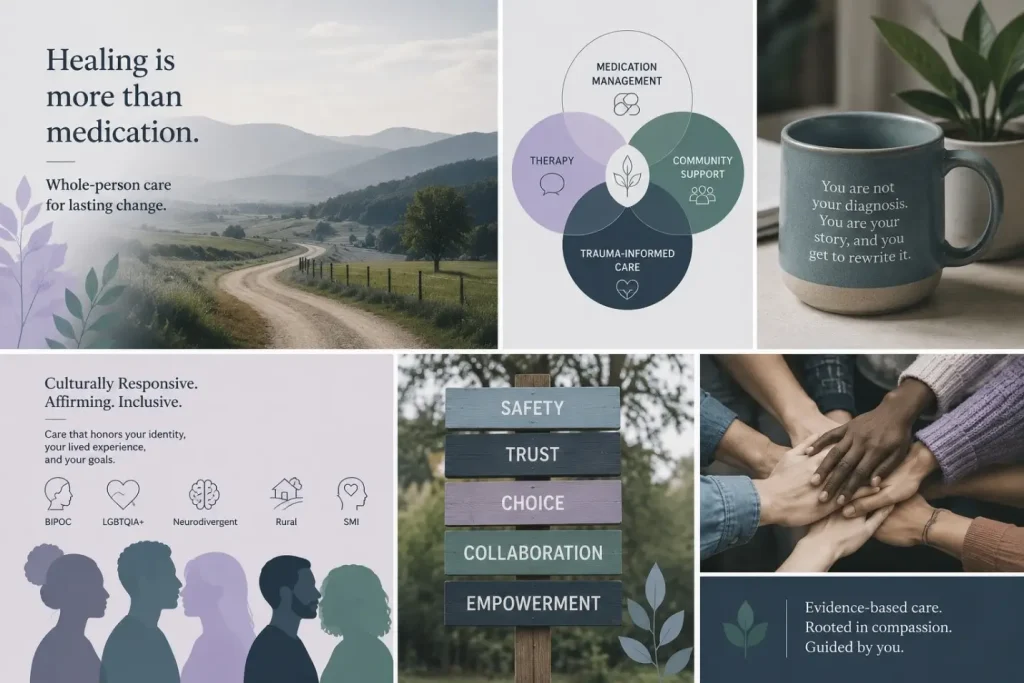
Mental health disorders are complex, multifaceted conditions that often require more than medication alone for sustainable healing. While psychiatric medications can reduce symptoms of depression, anxiety, bipolar disorder, post-traumatic stress disorder (PTSD), and other serious mental illnesses (SMI), research consistently demonstrates that long term recovery outcomes improve when therapy, community support, and trauma-informed care are integrated into treatment plans. For BIPOC, neurodivergent, LGBTQI+, and rural communities, culturally responsive psychotherapy can be especially critical in addressing systemic barriers, chronic stress, discrimination, and untreated trauma.
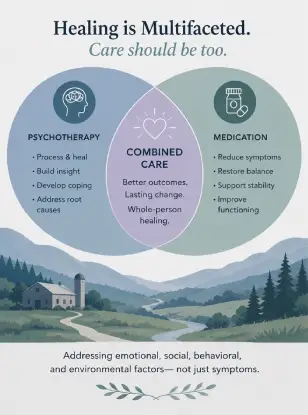
Research supports the effectiveness of combining psychotherapy with medication rather than relying solely on pharmacological interventions. A meta-analysis by Karyotaki et al. (2016) found that individuals receiving combined psychotherapy and medication treatment for major depression experienced better long-term outcomes than those receiving medication alone. Similarly, De Jonghe et al. (2018) reported that psychotherapy can be equally effective or more beneficial when integrated with medication management for depressive disorders. These findings reinforce the importance of holistic mental health care that addresses emotional, social, behavioral, and environmental factors rather than only symptom suppression.
For individuals living with trauma, medication may reduce immediate symptoms such as insomnia, panic, or mood instability, but it does not always resolve the underlying psychological wounds connected to adverse life experiences. Trauma-informed therapy helps clients process experiences of racism, poverty, gender discrimination, family violence, religious trauma, or identity-based oppression. This approach is particularly important for LGBTQI+ individuals and BIPOC communities who may have experienced historical or systemic trauma within healthcare systems.
Case studies involving integrated care models also demonstrate improved outcomes among individuals with co-occurring disorders. In one randomized clinical trial, patients with serious psychiatric illnesses who received integrated behavioral and medical care reported improved quality of life and greater treatment engagement compared to those receiving standard care alone (Druss et al., 2001). Likewise, research examining obsessive compulsive disorder showed significantly lower relapse rates among participants who combined psychotherapy with medication compared to medication only treatment (Biondi & Picardi, 2005).
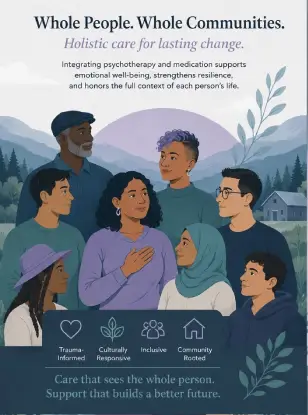
For neurodivergent individuals, including autistic adults and people with ADHD, therapy can provide tools for emotional regulation, sensory processing support, executive functioning, and identity affirmation that medication alone may not fully address. Rural communities also benefit from psychotherapy because barriers such as stigma, transportation limitations, and reduced access to mental health specialists can contribute to long-term isolation and untreated trauma. Telehealth and trauma-informed private practices help bridge these gaps by creating safer and more accessible pathways to care. Mental health recovery is not one-size-fits-all. Effective treatment often includes psychotherapy, medication management when appropriate, peer support, lifestyle interventions, and culturally affirming care. A trauma informed approach recognizes that symptoms frequently develop as adaptive responses to overwhelming experiences rather than personal failures. Healing occurs when individuals feel seen, validated, empowered, and supported in the context of their lived experiences.