July is recognized as Minority Mental Health Month, a time dedicated to increasing awareness of the unique mental health challenges faced by historically marginalized communities. For many BIPOC, LGBTQI+, neurodivergent, severely mentally ill (SMI), and rural individuals, accessing quality mental health care involves more than simply finding a therapist—it requires finding a clinician who understands the complex intersections of identity, trauma, culture, systemic oppression, and lived experience.
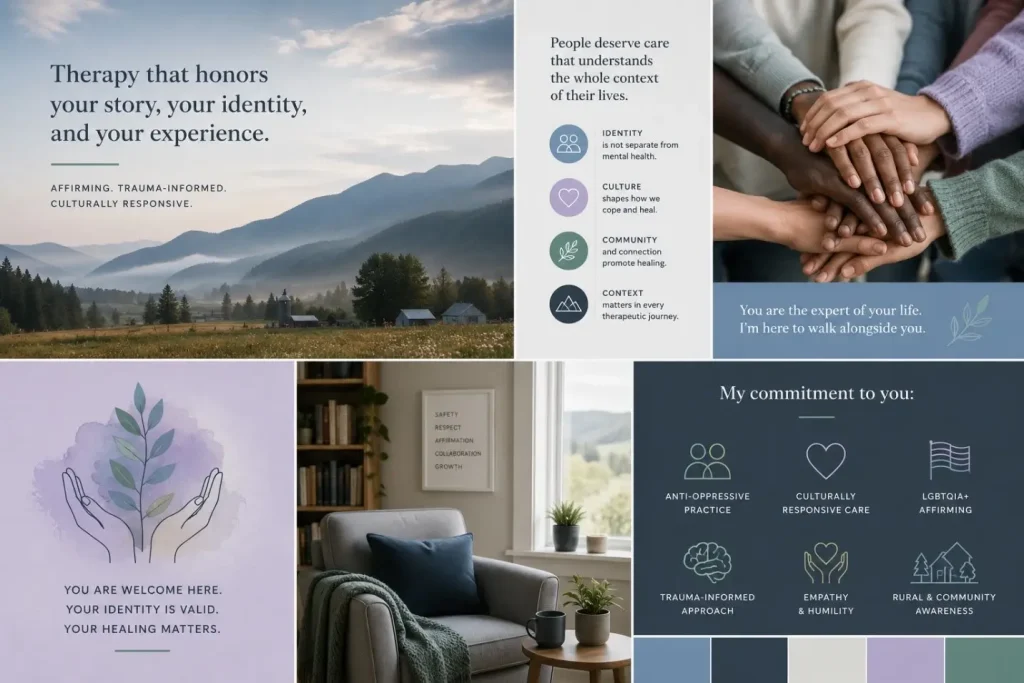
Research consistently demonstrates that culturally informed and culturally responsive mental health treatment improves therapeutic trust, engagement, and long-term mental health outcomes (Hook et al., 2016). Culturally responsive care acknowledges that factors such as racism, discrimination, ableism, homophobia, transphobia, poverty, religious trauma, and geographic isolation can deeply impact emotional well-being. Therapy that ignores these realities may unintentionally invalidate clients’ experiences or reinforce harm.
For example, a Black autistic adult may experience chronic burnout related to masking neurodivergence while simultaneously navigating racial microaggressions in educational or workplace environments. Similarly, a transgender person living in a rural community may face barriers to affirming healthcare, social isolation, and increased anxiety due to fear of rejection or discrimination. Trauma-informed therapy recognizes that mental health symptoms often develop within broader social and systemic contexts rather than existing in isolation.
Studies have found that minority populations are significantly less likely to receive adequate mental health treatment due to stigma, mistrust of healthcare systems, lack of representation, and financial or geographic barriers (Alegría et al., 2018). Additionally, culturally marginalized individuals frequently report feeling misunderstood or pathologized by providers who lack awareness of their identities and experiences.
Culturally responsive therapy goes beyond “cultural competence.” It involves ongoing self-reflection, humility, anti-oppressive practices, and recognition of clients as experts in their own lived experiences. Therapists who provide affirming care understand that identity impacts communication styles, family systems, coping mechanisms, spirituality, trauma responses, and emotional safety.
A trauma-informed and culturally affirming therapist may help clients:
- Process racial, religious, or identity-based trauma
- Explore intersectional identities without shame
- Navigate family rejection or cultural conflict
- Develop self-advocacy and boundaries
- Reduce masking and burnout in neurodivergent individuals
- Build resilience within oppressive systems
- Access community support and affirming resources
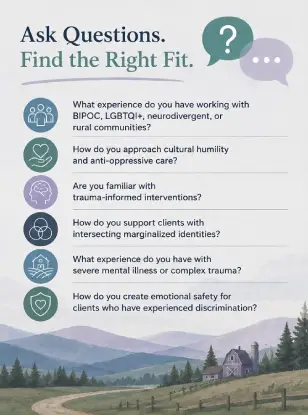
When seeking a qualified therapist, individuals should consider asking questions that address all aspects of their identity and care needs. Helpful questions may include:
- What experience do you have working with BIPOC, LGBTQI+, neurodivergent, or rural communities?
- How do you approach cultural humility and anti-oppressive care?
- Are you familiar with trauma-informed interventions?
- How do you support clients with intersecting marginalized identities?
- What experience do you have with severe mental illness or complex trauma?
- How do you create emotional safety for clients who have experienced discrimination?
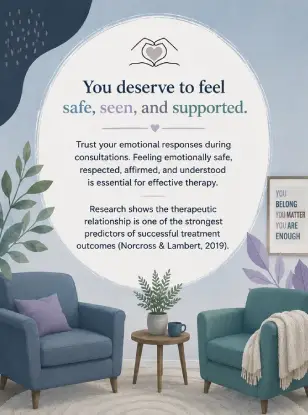
Individuals should also trust their emotional responses during consultations. Feeling emotionally safe, respected, affirmed, and understood is essential for effective therapy. Research suggests that the therapeutic relationship itself is one of the strongest predictors of successful treatment outcomes (Norcross & Lambert, 2019).
Minority Mental Health Month reminds us that healing cannot occur fully without culturally responsive support. Every individual deserves mental health care that honors their full identity, lived experience, and humanity.
Please remember that therapy is a personal choice and a deeply personal journey. If you do not think that Krishana is right for you please seek out other options at these other websites:
Black Therapists Matter https://www.blacktherapistsmatter.com
LatinxTherapy https://latinxtherapy.com
Or filter by your preferred therapist cultural identity on other therapy platforms such as Grow or SonderMind To begin therapy with culturally informed, trauma-responsive care, schedule an appointment with therapist Krishana Overstreet at Mapping Resilience Therapy Center.