Family estrangement is a deeply complex and often painful experience that can carry layers of grief, liberation, guilt, and identity conflict. For individuals within BIPOC, LGBTQI+, and rural communities, estrangement may also intersect with cultural expectations, intergenerational trauma, religious beliefs, and systemic oppression. In trauma-informed therapy, it is essential to approach estrangement not as a failure of family loyalty, but as a survival response that may protect emotional, psychological, or physical safety.
Research suggests that family rejection can significantly impact mental health outcomes, particularly among LGBTQI+ individuals and marginalized populations (Ryan et al., 2009). In many collectivist cultures, family unity and interdependence are highly valued, which can intensify the emotional burden of creating distance from harmful family systems. Clients may experience internal conflict between honoring cultural identity and protecting their wellbeing. Trauma-informed therapy recognizes that both realities can coexist.

Case Example #1
A Black queer adult raised in a conservative religious household may choose estrangement after years of emotional invalidation related to sexual orientation. While separation from family may reduce exposure to rejection and psychological harm, the individual may also mourn the loss of cultural traditions, community rituals, and familial connection. Therapy in this context should avoid framing estrangement as inherently empowering or inherently harmful. Instead, clinicians can help clients explore how cultural identity, safety, and personal values intersect.
Similarly, individuals from rural communities may face additional barriers when navigating estrangement. Rural culture often emphasizes privacy, self-reliance, and close-knit family systems(Subica et al., 2015). A neurodivergent young adult in a rural area who distances themselves from emotionally abusive relatives may struggle with isolation due to limited community support and fear of social stigma. Trauma-informed care involves acknowledging these contextual realities while collaboratively building alternative systems of support and belonging.

Case Example # 2
Consider a Latina client who experienced chronic emotional abuse connected to rigid gender expectations within her family. Although she chose limited contact to protect her mental health, she also feared being perceived as disrespectful or “ungrateful.” In therapy, processing cultural narratives around familismo the strong identification and attachment to family common in many Latinx cultures became essential. Rather than dismissing these cultural values, therapy focused on helping the client redefine family loyalty in ways that included self-respect and emotional safety.
Respecting cultural identity within estrangement work requires therapists to remain culturally humble and non-assumptive. Clinicians should avoid encouraging immediate reconciliation or complete cutoff without understanding the broader sociocultural context. Instead, therapeutic goals may include boundary development, grief processing, identity exploration, nervous system regulation, and building chosen family networks (Sue et al., 2019).
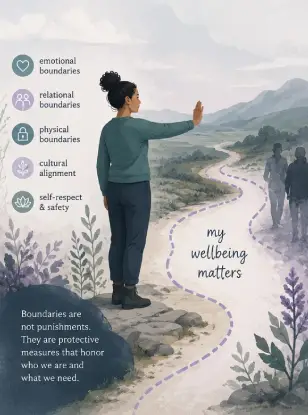
Boundary work is particularly important in trauma recovery. Boundaries are not punishments; they are protective measures that clarify emotional, relational, and physical needs. Clients may choose varying levels of contact depending on safety, cultural obligations, financial dependency, or caregiving responsibilities. Therapy can support clients in developing boundaries that align with both personal wellbeing and cultural values.
Ultimately, family estrangement is rarely a simple decision. For marginalized individuals, it often reflects years of navigating invalidation, discrimination, and survival within systems that minimized their needs. Trauma-informed therapy offers space to process these experiences without shame while honoring the complexity of cultural identity, grief, resilience, and healing.