January Mental Health Awareness Month is an important reminder that mental health is not separate from physical health it is a core component of whole-body wellness. For individuals in BIPOC, LGBTQI+, neurodivergent, severely mentally ill (SMI), and rural communities, understanding the connection between emotional well-being and physical health is especially critical due to the compounded effects of systemic stress, healthcare disparities, and limited access to culturally responsive care.
At Mapping Resilience Therapy Center, therapist Krishana Overstreet, LCSW, emphasizes that mental health is physical health. Her trauma-informed, culturally responsive private practice was founded on the belief that healing must address the full human system mind, body, environment, and identity. This approach is especially vital for marginalized communities who often experience chronic stress exposure due to racism, ableism, homophobia, transphobia, poverty, and geographic isolation.

The Mind-Body Connection in Mental Health
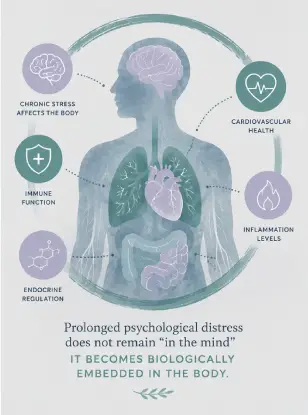
Research in psychoneuroimmunology demonstrates that chronic stress and untreated mental health conditions directly affect immune function, cardiovascular health, endocrine regulation, and inflammation levels (Slavich & Irwin, 2014). In other words, prolonged psychological distress does not remain “in the mind” it becomes biologically embedded in the body.
For example, individuals experiencing chronic anxiety or trauma may present with headaches, gastrointestinal distress, sleep disturbances, or autoimmune flare-ups. Depression has also been linked to increased risk for heart disease and metabolic conditions. These findings reinforce that mental health treatment is preventative healthcare, not optional care.
Case Examples: When Mental Health Shows Up in the Body
A Black queer woman living in a rural community may experience chronic hypervigilance due to both racialized stress and lack of LGBTQI+ affirming support systems. Over time, she develops insomnia, high blood pressure, and digestive issues. Without access to trauma-informed care, her physical symptoms may be treated in isolation, while the root psychological stress remains unaddressed.
A neurodivergent autistic adult may experience sensory overload and masking in workplace environments, leading to chronic exhaustion, migraines, and burnout. Without neurodivergent-affirming mental health care, these symptoms may be misinterpreted as physical illness alone rather than interconnected stress responses.
A person living with severe mental illness (SMI), such as bipolar disorder, may experience medication side effects, emotional dysregulation, and disrupted sleep cycles, all of which impact physical functioning and quality of life. Integrated care that addresses both psychological and physical needs is essential for stability and recovery.

Whole Body Health Requires Integrated Care
Research supports integrated healthcare models that combine mental health treatment with primary care, lifestyle support, and social determinants of health interventions. Individuals receiving integrated care show improved outcomes in both physical and psychological functioning compared to those receiving fragmented services (Butler et al., 2008).
Key components of whole-body mental health care include:
- Trauma informed psychotherapy
- Sleep regulation and nervous system stabilization
- Nutrition and hydration awareness (without diet culture framing)
- Movement that supports regulation (not punishment-based exercise)
- Medication management when appropriate
- Sensory-aware environmental adjustments for neurodivergent individuals
- Social support and community connection
- Addressing systemic stressors (racism, ableism, poverty, isolation)
How Marginalized Communities Are Most Impacted
BIPOC, LGBTQI+, neurodivergent, SMI, and rural populations often experience higher levels of chronic stress due to structural inequities in healthcare access, discrimination, and resource availability. Research shows that chronic exposure to discrimination is associated with increased allostatic load the cumulative wear and tear on the body caused by chronic stress (McEwen, 2017). This makes whole-body mental health care not only beneficial but essential for long-term well-being.
Reframing Mental Health as Physical Health
Mental health awareness is not just about reducing stigma it is about recognizing that emotional distress is a physiological experience that deserves comprehensive care. Healing requires addressing both internal experiences and external environments that contribute to distress.
When mental health is treated as whole body health, individuals are more likely to experience improved emotional regulation, physical stability, and overall quality of life.
At Mapping Resilience Therapy Center, Krishana Overstreet provides trauma-informed, culturally responsive care that integrates mind-body understanding while honoring identity, lived experience, and systemic context.
To begin trauma informed, whole-body mental health care, schedule an appointment with therapist Krishana Overstreet at Mapping Resilience Therapy Center.
Reframing Mental Health as Physical Health
Mental health awareness is not just about reducing stigma it is about recognizing that emotional distress is a physiological experience that deserves comprehensive care. Healing requires addressing both internal experiences and external environments that contribute to distress.
When mental health is treated as whole body health, individuals are more likely to experience improved emotional regulation, physical stability, and overall quality of life.
At Mapping Resilience Therapy Center, Krishana Overstreet provides trauma-informed, culturally responsive care that integrates mind-body understanding while honoring identity, lived experience, and systemic context.
To begin trauma informed, whole-body mental health care, schedule an appointment with therapist Krishana Overstreet at Mapping Resilience Therapy Center.